Red Veins on the Face: Causes, Treatment and What to Expect
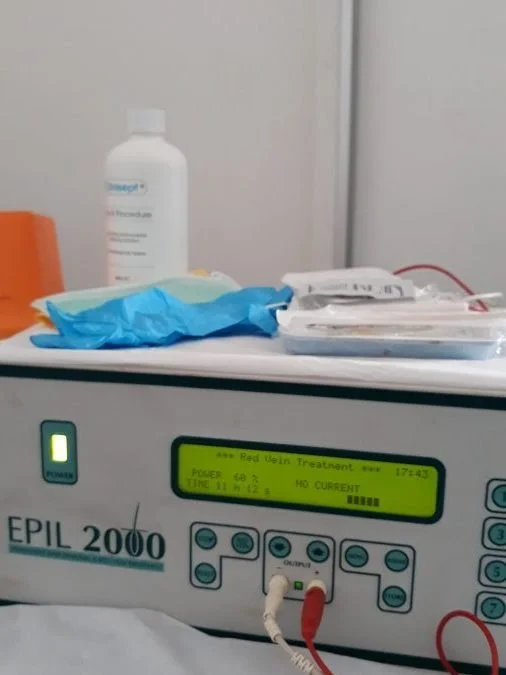
Red veins, often called thread veins or broken capillaries, are a common skin concern. Whilst some people naturally have a rosy complexion, others develop visible facial veins over time due to ageing, sun exposure, skin sensitivity, or conditions such as rosacea.
These small blood vessels most commonly appear on the cheeks, nose, chin, and forehead. Initially they may come and go, but as the vessel walls weaken, the redness can become more permanent.
What Causes Facial Red Veins?
There are many possible causes of thread veins, including:
Rosacea
Hereditary factors
Sun damage
Smoking and alcohol consumption
Pregnancy
Allergies and skin sensitivity
Extreme temperatures
High blood pressure
Injury or trauma to the skin
Excessive sunbed use
Rosacea is one of the most common causes. It often begins with occasional flushing before progressing to persistent redness and visible capillaries.
How Are Red Veins Treated?
At Daydreams, facial thread veins can be treated using the Epil 2000 system.
A fine probe is placed against the skin and a small amount of high-frequency current is applied to the affected capillary. The vessel is cauterised, causing the trapped blood to dry and disperse naturally through the body's own systems.
The treatment is highly targeted and non-invasive, making it particularly effective for small facial thread veins and spider naevi.
Spider Naevi
Spider naevi are small red marks with a central red body and tiny radiating capillaries, giving them a spider-like appearance. These often respond particularly well to treatment and can sometimes be removed in a single session.
What Happens After Treatment?
Immediately after treatment the area may appear more noticeable as the dried blood within the treated capillary becomes darker. This is a normal part of the healing process.
Most areas settle within a week, although larger or more prominent veins may take longer to resolve.
During healing:
Avoid scratching or exfoliating the area
Avoid saunas, steam rooms, and excessive heat
Protect the skin from sun exposure
Leave the area undisturbed for at least 24 hours
Follow the aftercare advice provided
Camouflage make-up can usually be applied after 36 hours.
How Many Treatments Will I Need?
The number of treatments depends on the size and extent of the affected area. Small veins may respond after a single session, whilst larger areas may require additional treatments spaced 4–6 weeks apart.
Treatment sessions typically last between 10 and 30 minutes, and every treatment is tailored to the individual skin response to achieve the best possible outcome.
Is Treatment Suitable for Everyone?
Facial thread veins respond very well to treatment with Epil 2000. However, larger areas of leg veins are generally not suitable for this technique and may require alternative treatments.
A consultation will help determine whether treatment is appropriate for your skin and concerns.